

Beyond the Chatbot: Predictive Modeling & Advanced Data Science
Master the engine under the hood. While LLMs are revolutionary for language, traditional Machine Learning (ML) remains the gold standard for analyzing sensor data, predicting equipment failure, and optimizing water distribution. In this final 2-day intensive workshop, you will move beyond generative text and learn to build, train, and deploy high-precision predictive models.
By the end of this session, you will understand the "Science of Prediction." You will be able to determine exactly which ML algorithm fits your water data, how to validate your results, and how to combine these traditional models with AI helpers for a comprehensive "Smart Water" strategy.
The Curriculum: The Science of Water Intelligence in 15 hours
- The ML Landscape: Understanding where Large Language Models end and "Classical" Machine Learning begins. Defining the specific water-sector problems that require these methods (Classification, Regression, Clustering).
- The Essential Stack: Hands-on setup of the industry-standard libraries (Scikit-Learn, Pandas, NumPy) within your Python environment.
- Algorithmic Selection: A deep dive into the "Why" behind the "What." Learn to choose between Random Forests, Support Vector Machines, and Gradient Boosting based on your specific dataset.
- From Toy Problems to Real Infrastructure: Start with a controlled dataset to master the logic, then pivot to your "Bring Your Own Problem" capstone project.
The Build Lab: Engineering Predictive Accuracy
Using our 50/50 Model, you will transform from a user into a model-builder:
- Days 1 and 2: Daily instruction on the math and logic of ML, followed by 3-hour mentored "Build" sessions.
The Capstone: Presenting a validated predictive model that addresses a specific operational challenge in your organization.
Workshop Details
- Prerequisite: Bootcamp 3 (Python for Water) or equivalent coding experience.
- Duration: 2 days (December 3rd and 4th) for the workshop. A 1-hour kickoff session on November 19th. Follow-up sessions (1 hour on Friday at 12 noon PT) offered for 2 weeks after the workshop if you have questions or would like to present to your peers
- Commitment: 6 Hours Per Day on the workshop days (3 hours teaching | 3 hours building)
- Final Output: A capstone project presentation of your custom AI solution
- A certificate of completion to share with your manager and professional network
- Complimentary early access to the Digital Water Hub platform for 3 months after the course ends. Mastery doesn't end in 2 days, so you can continue to learn with recordings from this workshop and other courses as well as network with a community of water innovators.
Meet your instructor
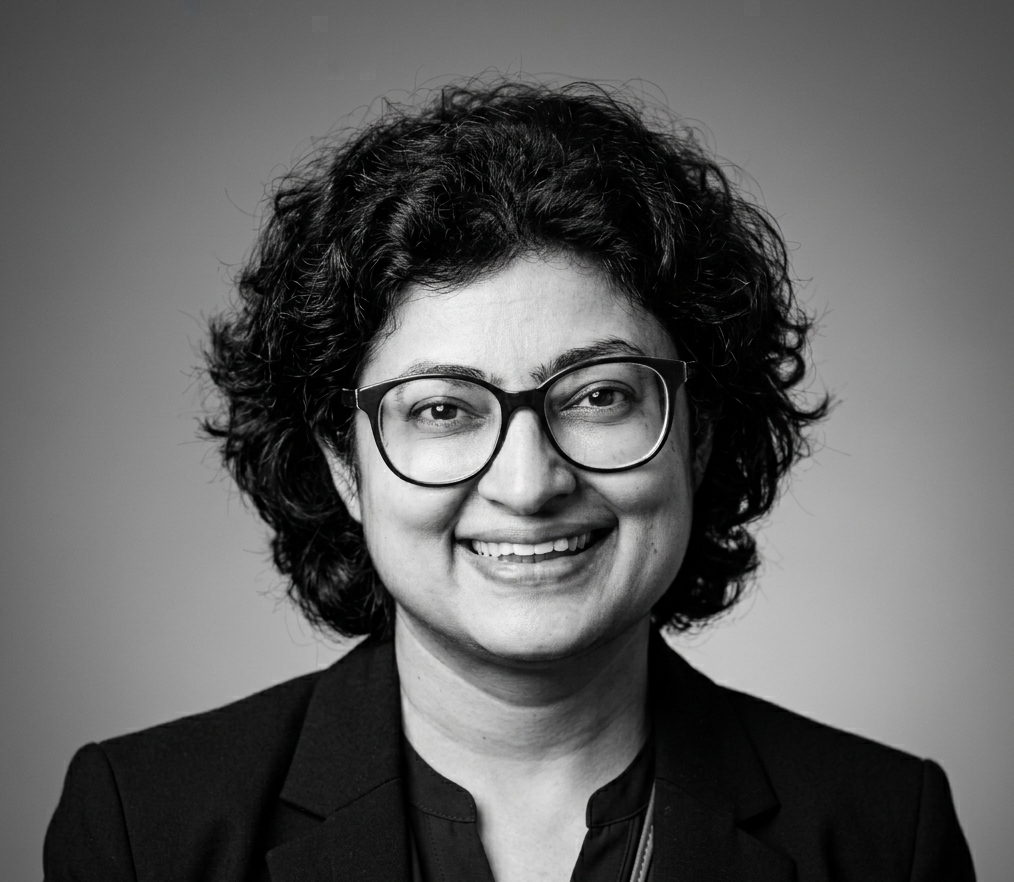
Gayathri Gopalakrishnan, PhD is an award-winning scientist, engineer and entrepreneur who has been pioneering the integration of AI in water, agriculture, energy and climate since 2003. She has worked in multi-billion dollar organizations including Facebook and Argonne National Laboratory as well as several clean tech startups.
As a scientist, she has been recognized by the US National Academies of Science and Engineering for innovative environmental research and she was invited by the Obama White House to participate in the first conference on innovation in clean technology and big data.
As an engineer and technical leader, she has led teams translating complex R&D into commercial products supporting $10M+ in revenue. Recently, as the Director of Science at Regrow Ag, she led the development of AI systems for digital twins that scaled 40x across 18 countries and led to 36x efficiency gains.
She received her PhD in Environmental Engineering from the University of Illinois at Urbana-Champaign and her Bachelors in Civil Engineering from BITS Pilani, India

The courses are really useful and easy to follow. It's a 2-for-1 in understanding which tools to learn and which to brush up which makes it easy to upskill at my job or find a new one.
Mary, Environmental Scientist

The instructor is very friendly and knows her subject! The course helped me get comfortable using and building data science models at my job.
Karen A., Water Manager and Data Analyst

I found the material very informative and interesting. It was a fascinating introduction to the applications of data science in clean technology
Ganesh, Data Scientist